Nutrition
Polyphenols: The Edible Compounds to Help Your Body Age Smarter —Not Faster
Whether you’re deep into the world of longevity or just beginning to explore it, there’s something pretty intriguing about the idea that many of the most powerful tools we have for aging well aren’t built in a lab. In fact, you’ll find a lot of them in the kitchen, literally within arm’s reach, maybe tucked into a cup of tea or a handful of berries or a drizzle of extra virgin olive oil.
The common denominator here are polyphenols, natural plant compounds that have become a major focus of nutrition research in recent years. They’re not vitamins or minerals and they’re not technically ‘essential,” as in necessary for life. But over the past two decades they’ve emerged as one of the most studied groups of “micronutrients” or “phytonutrients,” largely because of their potential to support long-term health and their influence on how we age.
So, what are they actually doing inside the body? Here’s a look at the promise and power of polyphenols, and why they’re worth your attention, that is, if living a longer, healthier life is on your radar:
Aging, but maybe not quite as you thought.
To understand why polyphenols matter, it helps to take a step back and look at aging itself. Most of us grew up thinking of aging as the simple passage of time, something that just happened to grownups and grandparents as the years went by. But we now know that’s not the full story.
Aging isn’t just one solitary thing but rather a long chain of biological events unfolding inside the body over decades. Rising inflammation, damage to DNA, reduced energy production, and slower cellular repair, these are what researchers often describe as key drivers of age-related decline.
These processes don’t happen in isolation, it’s more of a group effort. They build on each other and add up. Over time, small disruptions can develop into more significant issues, eventually showing up as chronic disease, fatigue, as well as the familiar visible signs of getting older, like wrinkles and thinning hair.
But here’s where the story gets more interesting. Research shows that certain compounds in food appear to interact with these processes. Not all at once, and not dramatically, but gradually, over time. And polyphenols are at the center of the action.
Small compounds, big influence.
Polyphenols are a large family of plant compounds defined by their chemical structure. Scientists group them into categories like flavonoids, phenolic acids, stilbenes, and lignans. Each behaves a little differently, but they share a common purpose in plants: protection against environmental stress. So, when we eat plant foods, we take in those same compounds.
It helps to think of it in practical terms: plants can’t move, so they rely on internal defenses to deal with sunlight, pests, and damage. Polyphenols are part of that defense system. When we eat those plants, those compounds don’t just disappear. In a general sense, we borrow some of their protective chemistry. That’s a big reason diets rich in plants continue to show strong links to better long term health – so piling one’s plate high with them is a no-brainer health ‘hack’ for everybody.
Eat your way younger.
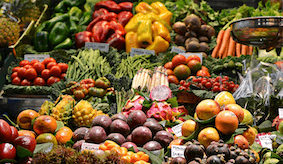
Polyphenols are abundant in foods that are already associated with good health so chances are, you’re already eating your fair share. Berries bring one collection of compounds. Tea brings another. Cocoa, apples, onions, and extra virgin olive oil each bring their own mix. That’s one reason dietary approaches like the Mediterranean diet consistently show strong links to longevity.
What that means for you on the practical, day-to-day is that eating a colorful polyphenol-rich plant-forward diet can help positively influence how your cells behave. So, instead of treating polyphenols like another nutritional box to check, see them as compounds that help your body do what it’s already trying to do, like manage stress, repair itself, and keep things running smoothly for the long haul.
Your cells are under constant pressure.
Consider oxidative stress. Your body is constantly turning food into energy, and in so doing it also creates small amounts of reactive byproducts that can damage proteins, fats, and DNA if they build up faster than your body can manage them. If the balance is off, think faster aging and a higher risk of age-related disease.
Polyphenols come into play here in a couple of important ways. Many act as antioxidants, but what’s getting more attention now is how they support your body’s own defense systems. Scientists have moved beyond thinking of them as simple “free radical fighters.” It turns out they also influence the signals your cells use to protect and repair themselves, a big reason they’re being studied as healthy aging allies.
When inflammation hangs around too long.
Inflammation is another big piece of the puzzle. In the short term, it’s actually helpful. It’s how your body responds to things like injury or infection. But when that response doesn’t switch off and instead lingers at low levels over time, it works against you. That kind of chronic inflammation has been linked to a wide range of age-related conditions, including heart disease and metabolic problems. Luckily, the research suggests that polyphenols may help to regulate these inflammatory signals.
Energy, where it really counts.
To understand how all of this plays out, it helps to zoom in on your cells. Inside them are mitochondria, the structures responsible for producing energy. When they’re working well, your cells have what they need to function, repair, and keep up with daily demands. When they start to falter, energy production becomes less efficient, a shift that has been linked to aging and a range of chronic conditions.
This is where some of the most compelling polyphenol research is happening. Compounds like resveratrol and quercetin have been studied for their potential to support mitochondrial function and influence how cells manage energy. If so, the effect on longevity could be profound but more human research is needed to fully understand the impact.
Here’s a compelling example, ellagic acid, found in berries and nuts. Your gut microbes can convert it into a compound called urolithin A, and in clinical trials, urolithin A has been linked to improvements in muscle endurance and biomarkers tied to mitochondrial health in older adults. That doesn’t mean a handful of raspberries rewinds the clock or takes years off your face, but it does show how what you eat can influence how your body functions over time.
Cleanup matters just as much as damage.
Aging isn’t only about what builds up. It’s also about how well your body clears things out. Your cells are constantly repairing and replacing parts, relying on built-in systems like autophagy, essentially a form of cellular recycling. When that system slows down, damaged material starts to accumulate.
Researchers are now looking at how certain polyphenols may support these cleanup processes. Compounds found in green tea, for example, have shown activity in biochemical pathways involved in this non-stop clean-up.
There’s also growing interest in how polyphenols interact with senescent cells, damaged cells that stop dividing but don’t clear out as they should. Early research suggests some compounds, like quercetin and fisetin, may help send them packing but the clinical benefits haven’t yet been pinned down.
Your gut is in on it too.
One of the more interesting twists in this story is the role of your gut. Many polyphenols aren’t fully absorbed on their own. Instead, they’re transformed by your gut microbiome into smaller compounds that may have meaningful effects in the body.
What that means is that your body isn’t responding to food in a simple, one-step way. There’s an ongoing interaction between what you eat, your gut microbes, and your metabolism. That layered process may help explain why diets rich in plant foods tend to support health across multiple systems, rather than producing just one outcome.
What polyphenols really mean for your longevity.
Yes, consuming diets rich in these compounds may support healthier aging by influencing inflammation, oxidative stress, energy production, and cellular maintenance. All of this begs the question: How to harness the promise of polyphenols? Just dig in! Eat more real plant foods and aim for variety. Berries, tea, apples, onions, cocoa, nuts, and olive oil aren’t extras in this story. They’re the foundation. The science keeps circling back to a familiar story. What you eat, day after day, plays a key role in how your body holds up over time – so feed it well!