Health Coach Tips
Health Coach Tip - The Impact of Sound on Sleep: Is Your Bedroom Helping or Hurting Your Rest?
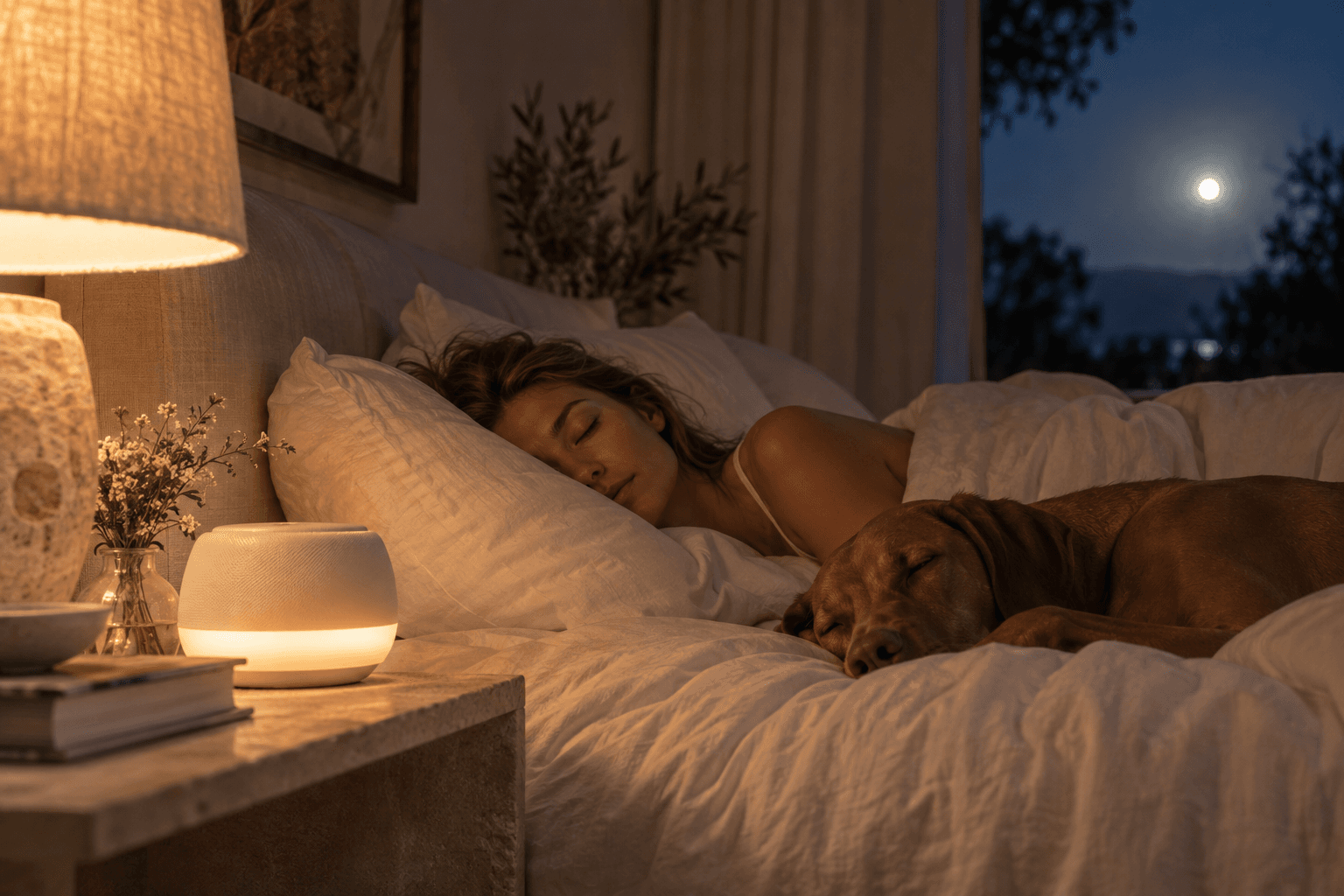
We spend a lot of time talking about light, temperature, and screens when it comes to sleep. But there is another part of your sleep environment that deserves attention: sound.
Your brain doesn't simply switch off when you fall asleep. It continues to process information from your surroundings throughout the night. A car horn, an airplane overhead, a partner moving around, or even sounds that don't fully wake you can influence what is happening beneath the surface.
And because good sleep is one of the foundations of healthy aging, your nighttime sound environment matters.
Your Brain Is Still Listening While You Sleep
As you move through the different stages of sleep, your brain remains responsive to the world around you.
Sudden or disruptive noises can cause brief arousals that you may not remember the next morning. Your heart rate and nervous system can respond even when you don't consciously wake up.
Occasional noise isn't necessarily a problem. But repeated nighttime disruption can fragment sleep and interfere with the normal progression through deep and REM sleep.
Over time, consistently poor sleep has been associated with poorer metabolic health, cardiovascular disease, cognitive decline, and other conditions associated with aging.
That's why it’s important to consider your sleep environment an important part of a longevity strategy.
Can Any Noises Be Helpful For Sleep?
Have you heard of white, pink, and brown noise?
These “colors” of noise are different types of continuous background sound, distinguished by how sound energy is distributed across frequencies. Many people use them to mask sudden or unpredictable noises and create a more consistent sound environment for sleep.
And anecdotally, plenty of people swear by them. But the science is less clear-cut. Studies of white and pink noise have produced mixed results, and systematic reviews have found that the evidence is not yet strong enough to say that continuous “colored” noise reliably improves sleep. Where it may be particularly useful is in noisy environments, where a steady background sound can help mask disruptive noises that might otherwise wake you up.
White noise contains energy across the audible frequency spectrum, creating the familiar steady “hiss” you might associate with radio static or a fan.
Pink noise reduces the intensity of higher frequencies, making it sound softer and deeper than white noise. Think steady rainfall, rustling leaves, or a gentle waterfall.
Then there’s brown noise, which places even more emphasis on lower frequencies, producing a deeper, bass-heavy rumble.
New Research Is Complicating the Story
Researchers are increasingly studying not just what sounds we hear during sleep, but when we hear them.
This distinction is important. Some studies have investigated continuous background noise. Others have tested brief sounds delivered at precise moments during particular stages of sleep. These aren't the same interventions.
Recent research has even raised questions about whether continuous noise played throughout the night could interfere with certain aspects of sleep architecture in some people. At the same time, researchers studying precisely timed auditory stimulation have found intriguing effects on the brain's slow waves during deep sleep.
In other words, the future of sleep sound may be less about playing something for eight hours and more about understanding how the sleeping brain responds to sound at specific moments.
Silence Still Matters
If your bedroom is naturally quiet and you sleep well, you don't necessarily need to add noise. Sound machines are tools, not requirements.
Start with the basics: reduce unpredictable noise where possible, keep your bedroom cool and dark, and create a consistent wind-down routine.
If background sound helps you relax or masks a noisy environment, keep it at a comfortable, low volume. And pay attention to how you actually feel.
Wearables can provide useful information about sleep duration and patterns, but your experience matters too. Do you wake feeling restored? Are you alert during the day? Are you consistently sleeping through the night? Those are important signals.
So, What’s The Takeaway?
Sleep isn't passive downtime. It is a critical period of restoration for the brain and body. And your environment helps determine how well that process unfolds.
Sound is one piece of that environment—and emerging research suggests we're only beginning to understand how precisely the sleeping brain responds to it.
The goal isn't to engineer every second of sleep. It's to remove unnecessary disruption and give your body the conditions it needs to do what it already knows how to do: recover.