Gut Health
Your Gut May Be the Missing Link in Your Hormone Health
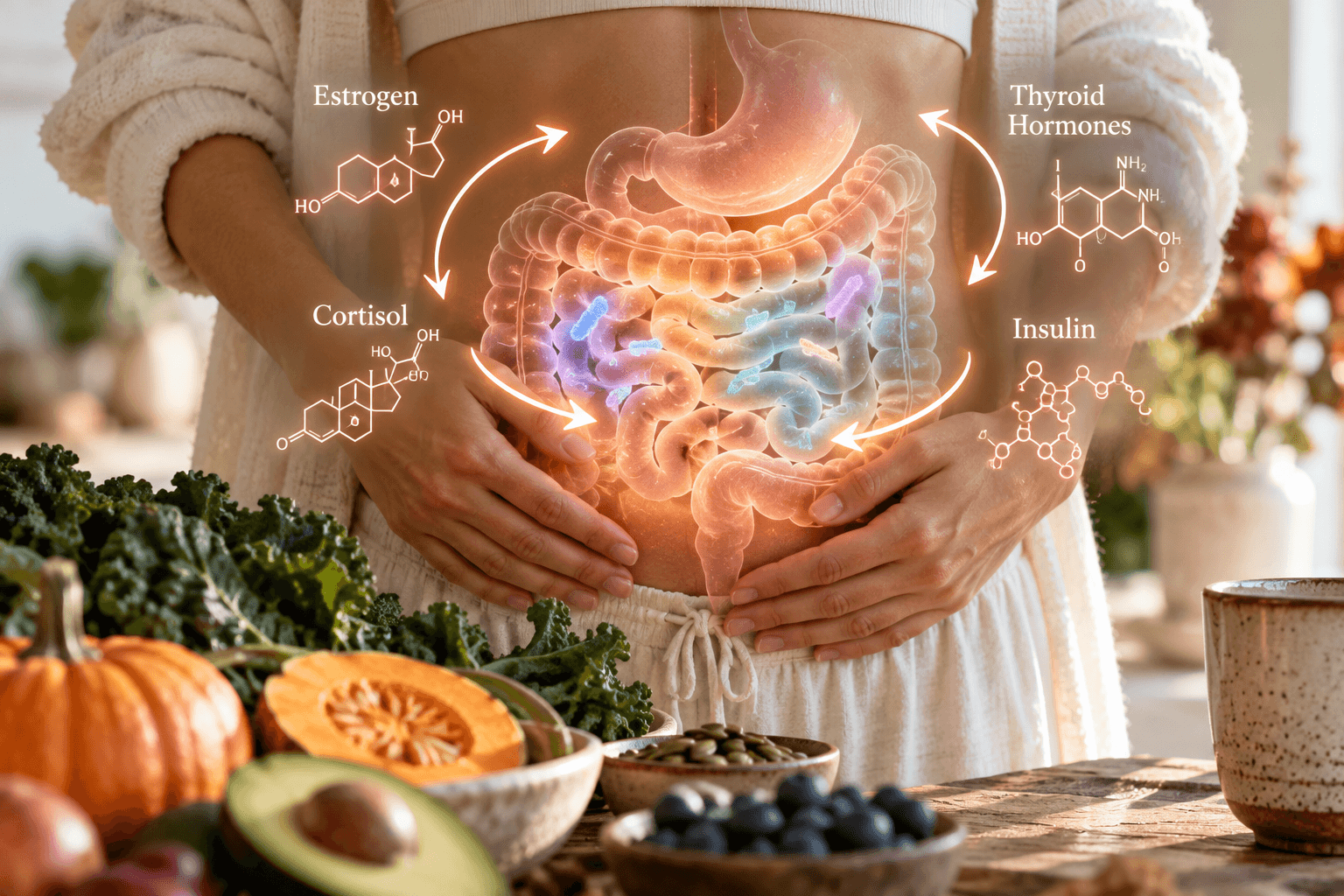
If you ever needed a compelling example of how, one way or another, all the important systems in the body influence each other, look no farther than your hormones and your gut. Sure, you think, they’re both important, but you may not realize quite how much. Turns out your different hormones regulate virtually everything your bodies do, their levels constantly moving up and down to respond to the requirements of the moment. And the gut is about all-important digestion, the breaking down of food into its basic building blocks so it can be burned for fuel or stored as fat and eliminate the rest.
What you also may not appreciate is that what happens in the gut doesn’t stay in the gut, it influences the rest of the body, very much including your hormones. I’m talking sex hormones, thyroid hormone, cortisol, insulin, the works. When this gut-hormone dialogue really becomes telling is when we pass into our middle years and beyond. Most of our crucial hormones age along with us, becoming less responsive to our body’s needs. And, although this process isn’t as well understood, our gut ages too, reflected in a change in the balance of the microbes that inhabit our gut microbiome, which, for example, can directly affect the function of estrogen, the primary female sex hormone.
Here’s a topline on what your hormones and your gut are saying to each other, and how, if we care about healthy aging and longevity, it becomes more and more important to steer that conversation in the right direction:
Introducing the estrobolome.
Ever heard of the estrobolome? Didn’t think so. That’s the name we now give the collection of gut bacteria responsible for regulating the body’s production of estrogen. How so? Yes, estrogen is secreted in the ovaries (and to a lesser degree in the adrenals and fat tissue). But after it circulates throughout the body enhancing the function of the reproductive organs, the cardiovascular system, the skin (and this is an incomplete list!), it’s work is mostly done. It travels to the liver to be packaged for elimination in the stool. But not all of it gets sent packing. A particular bacterial enzyme, beta-glucuronidase, “unwraps” some of that disposal packaging, allowing it to be reabsorbed and reactivated in the body. As it should be. But a poor diet or too much stress or antibiotics can throw off the balance of bacterial species in the gut microbiome, which can result in either too much or too little beta-glucuronidase being produced. The result can be too much estrogen reabsorption, or “estrogen dominance,” resulting in symptoms like heavy periods, severe cramping, fluid retention and weight gain. Or it can go in the other direction, too little reabsorption, causing or worsening common perimenopause and menopause symptoms like hot flashes, vaginal dryness and accelerated bone loss.
And as is usually true when different body systems are communicating, it’s a two-way street. Estrogen receptors are found throughout the GI tract. Accordingly, healthy estrogen levels can help protect and preserve the basic business of the gut, making sure the gut lining is strong, the gut immune system is in working order and the gut is digesting the food that passes through it efficiently – “motility” in a word. Consequently, the drop in estrogen levels during perimenopause and menopause may drive enervating gut symptoms like constipation, bloating and reflux. Or the shift in hormones may help cause a corresponding shift in the bacterial population of the gut, which in turn can alter circulating estrogen levels, through the reabsorption mechanism I’ve already described.
So, you can see when I’m working with a patient on sex hormone issues, especially during premenopause and menopause, I want to know what’s going on in the gut! Optimizing gut health and hormonal health should be complementary pieces of the same physiological puzzle.
The gut and the thyroid thermostat.
Think of the thyroid gland like your body’s thermostat, regulating how “cool” or “hot” the whole system is running – how much energy the body produces and how fast it expends it. To run the body at the proper speed, the gland depends on an adequate absorption of nutrients like iodine, selenium, zinc, iron and tyrosine. And a misbehaving gut can interfere with that absorption, be it an inflammatory gut condition like IBS or an out-of-kilter (“dysbiotic”) microbiome or even regularly taking stomach-acid blocking medications like PPIs.
And, as with estrogen, sometimes it’s the hormone that directly acts on the gut. One common symptom of low-thyroid or hypothyroidism is the slowed passage of food through the gut which can lead to constipation which in turn can promote the overgrowth of bacteria in the small intestine (SIBO). And SIBO bacteria can greedily consume key minerals before the gut wall can absorb them, thereby depriving the thyroid of what it needs, another nasty “feedback loop.” In fact, hypothyroidism, all too common in middle-aged women, can disturb the estrogen equilibrium. With the body’s thermostat set too low, the detoxification process in the liver can slow down, with the effect that too much estrogen is reabsorbed back into the system.
The gut-metabolism connection.
If thyroid hormone sets the rate that the body burns fuel, another hormone, insulin, secreted by the pancreas, regulates the combustion of that fuel.
Insulin escorts our glucose fuel out of the bloodstream and into the muscle cells where it’s burned for energy. In a healthy metabolism, these muscle cells are sensitive to insulin. When they’re not, i.e. they’re insulin resistant, both insulin and blood sugar levels tick up, promoting fat gain and, worst case, sending you down the path towards type 2 diabetes. Once again, the gut, and in particular, the microbiome, play an important role keeping your metabolic house in order.
When your diet includes plenty of plant fiber – vegetables are the mother lode here -- you are in effect feeding the “good” bacteria in your gut. They return the favor by producing a raft of metabolism-friendly compounds, including short chain fatty acids, first among them, butyrate. Among its other benefits, butyrate enhances insulin sensitivity throughout the body, which means more of the calories we consume get burned for fuel and less is stored as fat. Not only that, but the butyrate also pumps up the gut’s production of the hormone GLP-1, which most of us are familiar with as the “active ingredient” in the deservedly popular diabetes and weight-loss drugs, semaglutide (Ozempic/Wegovy) and tirzepatide (Mounjaro/Zepbound). Our naturally produced GLP-1 confers the same benefits on a smaller, physiological scale – increased insulin sensitivity, improved fat-burning, slower transit of food through the gut, and at the brain level, suppressed appetite.
The inflammation cops.
The butyrate story doesn’t end with metabolism. When the gut microbiome is well fed with fiber, the SCFAs it produces serve as food for the cells that line the gut well, and repair material when that one-cell-thick lining starts to grow thin. When the lining is healthy and tight, what goes on in the gut stays in the gut. But when the gut and its microbiome are buffeted by a fiber-poor diet, stress, or meds like antibiotics and PPIs, that lining can develop microscopic leaks, allowing harmful food particles and bacteria to leak into the bloodstream (“leaky gut”). That can trigger a system-wide inflammation which can show up anywhere from the brain to the skin. And broadly speaking, an inflamed system pushes our metabolism in the direction of insulin resistance which helps drive all the metabolic problems we’ve already discussed.
The gut-brain axis.
Let’s not forget one more hormone that’s intimately connected with the gut and overall metabolic health. That’s cortisol, our primary energy and stress hormone. At some level, we’ve all experienced the gut-stress connection. When we’re anxious, we feel “butterflies in the stomach” or have to make an unanticipated extra trip to the bathroom. When we mobilize our energy resources to meet a challenging situation, that’s acute stress, which isn’t itself harmful, it’s a necessary part of life. But when that stress takes the form of unrelenting, low-grade tension, it is very much a bad thing, including its effect on the gut. Chronically elevated cortisol can alter the balance of “good” and “bad” bacteria in the gut, compromise the integrity of the gut wall, and slow down elimination which can further throw off microbiome balance (remember the SIBO problem) and contribute to excessive estrogen reabsorption. Sex hormones, stress hormones, metabolic hormones and the gut — once again, it’s all connected!
One-stop shopping: supporting both gut and hormonal health.
Start by eating a wide range of plants. Think vegetables, berries, nuts, seeds, and herbs and spices provide the fiber, and disease-fighting polyphenol compounds, there they stuff that your microbiome craves. Probiotic foods like yogurt, kefir, sauerkraut and kimchi directly deliver healthful strains of bacteria to the gut, although go easy if you don’t readily tolerate them. So-called resistant starch, found in beans, lentils, oats, slightly green bananas and cooked-and-cooled potatoes and rice have their place too, but don’t go heavy on the carbs, any carbs, especially if you lean toward the insulin resistant.
Keep your protein levels topped off.
As we age, our sex hormones level decline, both estrogen and testosterone, and we have a harder time making muscle. Hormone supplementation is an option for some. But for the rest of us, we need to be doubly sure to get enough dietary protein, the raw material we make muscle from.
Keep your muscles moving.
Regular physical activity supports insulin sensitivity, muscle, microbiome diversity, just about everything good thing you can think of. It’s also just about our best insurance for keeping regular, which as we’ve seen, is good for microbiome health and for keeping estrogen levels stable.
Better sleep, better health.
Seven or eight hours of high-quality sleep a night is a boon for both gut and hormones, especially when it comes to managing your appetite, maintaining insulin sensitivity and keeping your cortisol levels under control.
Manage chronic stress
You can’t keep the gut-hormone conversation on an even keel if your lifestyle is constantly overrevving your nervous system.