Healthy Aging
Strong Bones, Longer Life: Why Bone Health Is Longevity Health
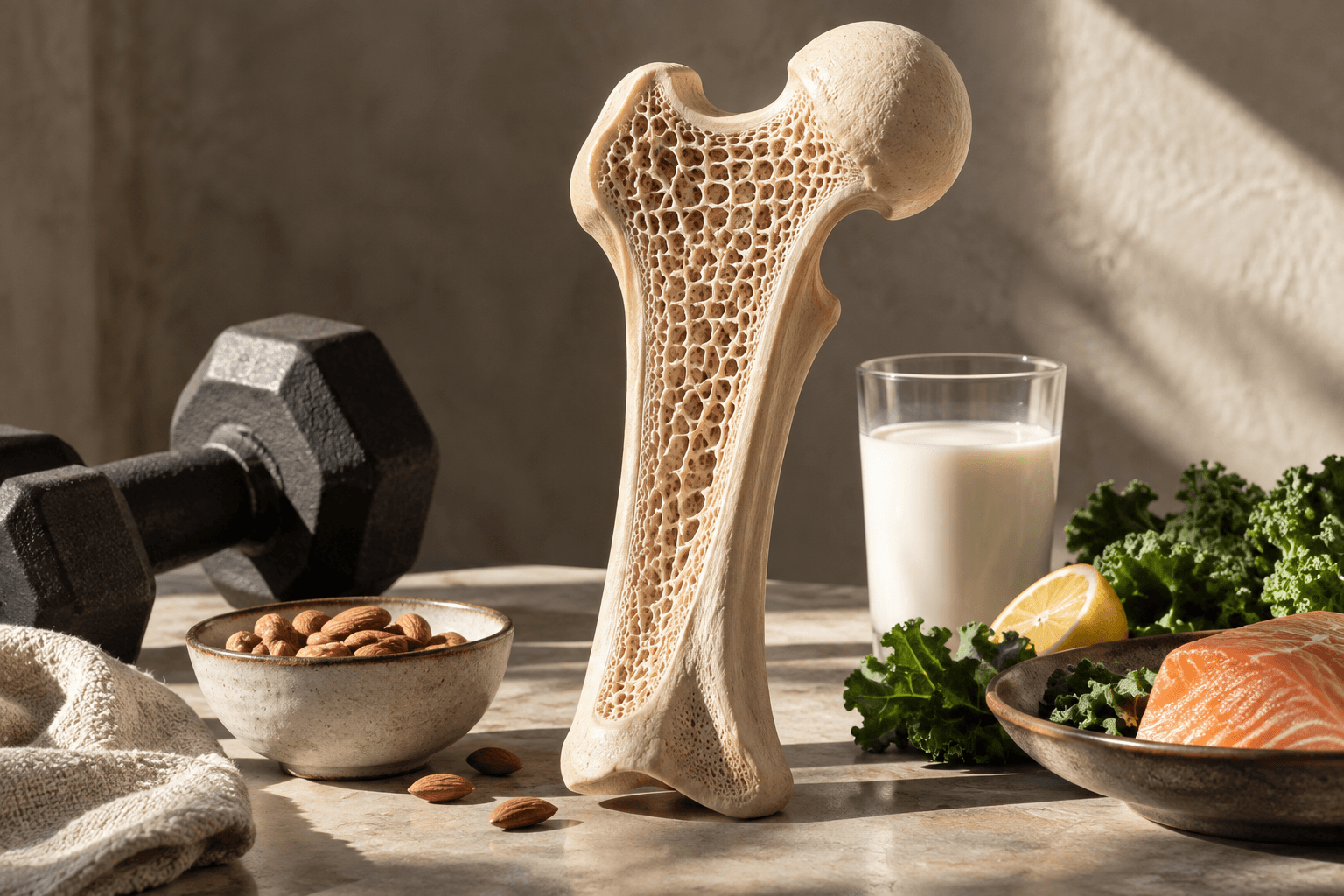
Our bones keep us upright and protect our organs, important stuff even though few us think about bone density when we’re younger. That is, until your doctor says it’s time for a DEXA scan, or a seemingly non-catastrophic fall lands you in the emergency room with a profoundly unordinary fracture and an appointment with an orthopedic surgeon.
The trouble is, until something breaks, we usually don’t really know how tough our bones are (or aren’t). Age-related bone loss gives us virtually no warning. Osteoporosis is often called a silent disease because bones can grow significantly weaker without pain or obvious symptoms. By the time of your first fracture, the process may have been undermining your bone health for years.
So, for anyone interested in longevity, bones deserve your attention, starting now. A longer life is lots more appealing if you can still haul your suitcase around, climb stairs, dance, travel and get out of a chair without talking your knees into it.
There’s another reason bone density matters. The skeleton we once thought of mainly as internal scaffolding turns out to be busy biological tissue with connections throughout the body. Here’s what you need to know about protecting your bones for the long haul:
Your skeleton’s got a lot going on – matter of fact, it’s alive!
Though bones may seem static once we’re done growing, they’re constantly being renewed. Specialized cells remove small areas of older bone while others replace them with new tissue, a process known as remodeling. This repairs everyday wear and tear and helps maintain the mineral balance your body needs. With age, however, rebuilding tends to fall behind removal, and bone mass gradually declines.
Beyond building bone, these specialized cells have another job. They produce signaling substances that enter the bloodstream and communicate with tissues elsewhere in the body. That’s why scientists now recognize the skeleton as an endocrine organ as well as a structural one. One of the best-known of these signals is osteocalcin, a protein made by bone-forming cells. Animal studies have linked osteocalcin with glucose metabolism and muscle growth among other functions. Researchers have found evidence for some of these relationships in humans too, although the full story is still being worked out.
Muscle and bone age together.
I talk a lot about preserving muscle as we get older, but bone belongs in that conversation too. Bone is responsive tissue. Hormones, food, exercise, illness, medications and how much physical work we ask of the skeleton all affect it. When muscles contract, they transmit force through the skeleton. Walking, lifting, climbing and carrying create mechanical loads that bone can sense. Physical activity is one of the signals that helps maintain bone; inactivity moves things in the opposite direction.
With age, we can lose muscle and bone at the same time. Less muscle means less strength; weaker bone makes a fall more likely to end in a fracture. The antidote? Progressive resistance training improves strength and can help maintain or modestly improve bone density, particularly at the hip.
Got weights? Then lift ‘em. Granted weight-lifting probably won’t return your skeleton the one you had at 25, but a regular routine can nudge things in a healthier direction, by slowing some age-related loss while strengthening the muscles around the bones you’ve already got.
Just one fall can change everything.
According to the U.S. Preventive Services Task Force, only about 40 to 60 percent of people who fracture a hip regain their previous mobility and ability to manage everyday activities. Osteoporotic fractures are also linked with loss of independence, additional fractures and an increased risk of death.
That’s why I find the usual discussion about osteoporosis a little too focused on numbers. Bone mineral density matters, but the real goal is preserving strength, mobility and independence. Can you catch yourself when you stumble? Carry the groceries home? Get onto the floor and, more importantly, get back up again? These abilities seem mundane until they become difficult. Then they matter enormously.
Menopause is a bone event too.
For women, the menopause years deserve extra attention because this is the time when bone loss can speed up. Estrogen helps regulate the balance between the cells that break down bone and those that rebuild it. As estrogen falls, that balance shifts. Research from the long-running Study of Women’s Health Across the Nation has found that the time around the final menstrual period is an especially active time for bone loss.
That means the menopausal years are a good time to pay closer attention to bone density, strength training, calcium and vitamin D, rather than waiting for osteoporosis to show up decades later. For some women, the discussion may also include hormone therapy, which can help prevent bone loss and reduce fracture risk. Whether it’s appropriate depends on factors including age, medical history, symptoms and how much time has passed since menopause.
Women get more attention when it comes to osteoporosis, but men lose bone too. Their risk rises later because they typically start adulthood with more bone mass and lose it more gradually. By the senior years, especially in men with additional risk factors, osteoporosis can still lead to fractures and loss of independence.
Are you working for or against your bones?
Some of the things that weaken your bones will surprise no one. Smoking, heavy alcohol use and long stretches of inactivity all raise risk. The usual suspects.
Others are easier to miss. Restrictive dieting can leave us short of protein, calcium and other nutrients. Certain digestive disorders can interfere with nutrient absorption. Several common medications can affect bone too, including long-term glucocorticoids such as prednisone, some seizure medications, cancer therapies, proton-pump inhibitors and some antidepressants. If you take medication regularly, review it periodically with your doctor to see whether bone health should be part of the discussion.
Next on the bone-loss agenda: losing excess weight. Weight loss can have major health benefits, but the body doesn’t lose only fat. Particularly in older adults, lean tissue and bone can go by the wayside as well. Researchers are looking at ways to protect the skeleton during weight-loss through exercise, adequate nutrition and, for higher-risk people, other interventions.
That question has become especially relevant in the GLP-1 era.
So far, studies do not show a clear increase in fractures in people taking GLP-1 drugs, and findings on bone density are mixed. But a 2026 study of people taking semaglutide or tirzepatide found that greater weight loss was associated with greater bone loss at the hip, particularly in participants without diabetes. We need more research, but it’s another reason to prioritize strength training and good nutrition when weight is coming off quickly.
Walk, yes. But pick things up too.
Walking is excellent exercise and counts as weight-bearing activity. Keep doing it. But if bone preservation is the goal, walking by itself leaves some tools in the toolbox. Notably, resistance exercise which asks more of muscle and bone. Research in older adults has found that progressive strength training benefits bone, with higher-load programs generally producing better results than lighter ones. Two or more sessions a week appear useful, although the right program depends on the person doing it.
That can mean weights, resistance machines, weighted carries, squats or step-ups. Impact exercise, such as hopping and jumping, can also stimulate bone, but it’s not for everyone. Someone with osteoporosis, previous fractures, joint trouble or poor balance needs a program suited to her actual body, not one borrowed from a 32-year-old fitness instructor on YouTube.
Balance deserves attention too. Exercise programs that improve balance and physical function reduce falls in older adults, so adding some balance work into your routine can pay major dividends. For instance, try standing on one leg while brushing your teeth if that’s safe. Practice getting up from a chair without your hands. Try tai chi. The goal is to help make your bones as fracture-proof as possible, and of course, avoiding falls.
Your bones need to be fed.
For decades, the nutritional conversation around osteoporosis could practically be reduced to one word: calcium. Yes, it matters big-time although there’s more to the story. Almost all the body’s calcium is stored in the skeleton, and it gives bone much of its mineral strength. Vitamin D helps the intestine absorb it. Good sources include dairy products (preferably organic), leafy greens, sardines and salmon.
Protein belongs at the table too. Bone contains a substantial protein matrix, much of it collagen, and protein helps preserve the muscle that loads and protects the skeleton. Contrary to the old idea that protein “leaches” calcium from bones, a reasonable protein intake does not appear to harm bone health.
Supplements can be useful when your diet alone isn’t providing enough calcium, or when blood tests show a vitamin D deficiency. In those cases, working with your doc can help determine whether a supplement is needed and how much makes sense. That way, you are adding what your body actually needs rather than taking high doses unnecessarily.
Don’t wait for a fracture to introduce yourself to your bones.
Because bone loss tends to happen without obvious symptoms, screening matters. A DEXA, or DXA, is a quick scan that measures bone mineral density, usually at the hip and spine. Current recommendations call for screening women 65 and older. Postmenopausal women under 65 should be assessed for risk factors and screened if there’s a higher-than-average fracture risk. For men, there is not yet enough evidence to recommend routine screening for everyone.
Bone density is useful information, but not the whole forecast. Age, previous fractures, family history, medications, muscle strength and fall risk all matter, so two people with similar DEXA results can have quite different real-world risks.
If osteoporosis is already present, exercise and diet may need some additional artillery. There are meds available for those at higher fracture risk, and finding osteoporosis early gives you a chance to act before a major fracture changes the picture dramatically.
Think about the body you’ll need later.
When we talk about longevity, the heart and brain tend to dominate the discussion. Fair enough. But there is a practical side of longevity that gets less attention: having a body capable of carrying you through those extra years. That means keeping enough bone, muscle, strength and balance in reserve that ordinary life stays ordinary for as long as possible.
So, challenge your muscles and your bones. Eat enough to maintain them. Pay attention when hormones dip or when medications or rapid weight loss change the equation. Get screened when it makes sense.
Last but not least: Start working on your bone density long before you feel old enough to need any of this, because what you build now is what you’ll have to draw on later. Your 90-year-old self may still have a suitcase to carry!