Healthy Aging
Brush Better, Age Better: Tend Your Mouth Microbiome Now for Longevity Later
When I was growing up, brushing your teeth was just one of those things your parents were forever telling you to do. You brushed in the morning, brushed before bed, maybe flossed for extra bonus points, and hoped to avoid cavities, fillings and a lecture from the dentist. Beyond that, few of us gave much thought to what was actually happening in our mouths.
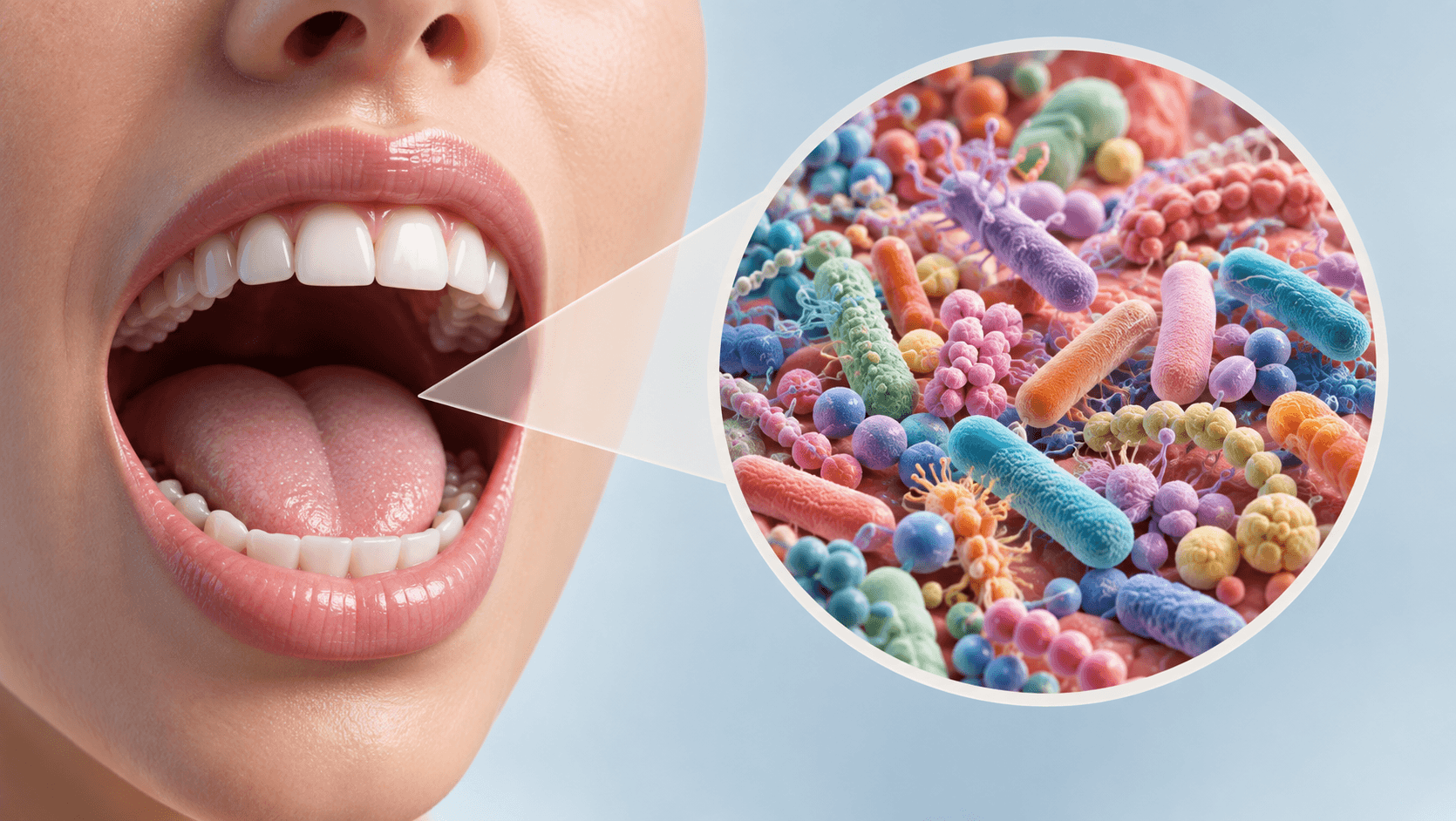
Since then, our understanding of mouth matters has evolved considerably. Today we know the mouth is part of a much larger biological system. Your gums, teeth, tongue and saliva are home to a complex community of bacteria, fungi and viruses collectively known as the oral microbiome. And while a mouth full of microorganisms may sound a little unappetizing, many of them are actually helpful. They keep more troublesome microbes in check, interact with our immune defenses and take part in chemical reactions that affect the rest of the body.
When that microbial world falls badly out of balance, however, the consequences can extend well beyond cavities. Periodontal disease, the chronic inflammatory form of gum disease that damages the structures supporting the teeth, has been associated with cardiovascular disease and stroke, diabetes, cognitive decline and dementia, and respiratory illnesses including COPD and pneumonia. Researchers are also investigating possible connections with certain cancers.
That doesn't mean a missed night of flossing causes Alzheimer's or a bout of gingivitis gives you heart disease. Much of the evidence points to associations rather than direct cause and effect, but it is noteworthy that oral disease shares risk factors with many chronic illnesses, including smoking, poor diet, obesity, high blood pressure and high LDL cholesterol. And those connections are substantial enough that the National Institute of Dental and Craniofacial Research (NIDCR) has spent roughly 40 years studying what it calls the "oral-systemic connection."
You’ve got billions of roommates living in your mouth.
For decades we tended to approach oral hygiene as microbial warfare: germs bad, antiseptic good, and carpet-bombing everything with a big capful of Listerine. But keeping your mouth healthy turns out to be a wee bit more complicated than just laying waste to every germ in it.
Scientists have identified roughly 700 bacterial species in the human mouth, and most of us carry a constantly shifting array of them. In a healthy mouth, these organisms coexist with us quite well. Some beneficial species species jostle with potentially troublesome microbes for space and nutrients, while others help keep them from gaining the upper hand.
Trouble often begins not because some out-of-left-field germ suddenly invades, but because that balance shifts, a process known as dysbiosis. When dysbiosis persists, it can set the stage for periodontal disease. According to NIDCR research, bacteria normally present at very low levels can expand dramatically, triggering an immune response and persistent inflammation.
In other words, a healthy mouth isn't a germ-free mouth. It's one where the microbes living there stay in balance. And the gumline is where that balance matters most, because it's where all those microbes push right up against the tissue that forms a protective boundary between the mouth and the rest of the body.
Healthy gums help keep that microbial community where it belongs. But when inflammation takes hold and persists, the gums can begin to pull away from the teeth and the tissues supporting them can become damaged. That’s when ordinary gum trouble can progress into periodontal disease, creating more opportunity for bacteria and inflammatory compounds to move beyond the mouth.
The trouble doesn’t stay in your mouth...
Here’s where things start to get interesting: Gum disease doesn’t necessarily stay confined to your mouth. Over the years, researchers have repeatedly found links between periodontal disease and cardiovascular disease. A 2025 American Heart Association scientific statement pointed to growing evidence connecting gum disease with atherosclerotic cardiovascular disease, possibly because oral bacteria can enter the bloodstream and chronic inflammation can affect blood vessels. That said, the AHA is careful to draw an important line: a link is not the same thing as proof. While we still can’t quite say that gum disease directly causes heart attacks or strokes, but we can say it doesn’t help.
The diabetes connection is even more of a two-way street. Poorly controlled diabetes can make gum disease more likely and more severe, while gum disease may, in turn, make blood sugar tougher to control. There is some evidence that treating periodontal disease can help with blood-sugar management, although researchers are still working out exactly how much of an effect it has.
The brain is another area getting a lot of attention. In an NIH-led study that followed more than 6,000 adults for as long as 26 years, older people with signs of gum disease and certain oral bacterial infections were more likely to later develop Alzheimer’s disease or related dementias. Again, that doesn’t mean gum disease causes dementia. Cognitive decline can also make brushing, flossing and regular dental care harder, so the relationship may run both ways.
And then there are the lungs. The mouth is, after all, the entrance to both the digestive and respiratory tracts. Disease-related oral microbes can be swallowed or inhaled, which is one reason researchers are investigating connections between oral health, respiratory infections and pneumonia.
None of this means your toothbrush can ward off every illness, but it does make one thing clear: your mouth isn’t operating in its own little universe. What happens there can have repercussions well beyond your teeth and gums.
Mouth matters can mess with your mood.
But the effects of poor oral health aren't only happening beneath the surface. Some of the most immediate consequences are the ones you can feel, see and live with every day.
Though it might not seem like a big deal, dental health affects your everyday life. Pain, persistent bad breath, and damaged or missing teeth can make eating, speaking, smiling and interacting with other people harder. They can also make you self-conscious, erode confidence and interfere with work and relationships.
Recent research using U.S. population data has found complex, two-way links between poor oral health, depression and oral-health-related quality of life. Making matters worse, people with depression may be less likely to seek regular dental care or keep up with brushing and flossing, which can compound existing oral problems.
The more teeth, the merrier.
And in case you needed another reason to keep your mouth in good shape, there may also be a longevity connection hiding in plain sight.
A major 2025 Japanese study examining dental and medical records from 190,282 adults age 75 and older found something interesting: people with more teeth, either healthy or successfully treated, had a lower risk of dying during the follow-up period.
In other words, when it comes to aging well, your teeth don't have to be perfect to be useful. A filled, crowned or otherwise successfully restored natural tooth can still earn its keep.
Lost a few already? Replacement teeth may matter too. Another large 2025 Japanese study found that among older adults with substantial tooth loss, the associations with mortality were generally less pronounced in people who used dentures or bridges than in those who didn't. That doesn't prove prosthetic teeth prolong life, but it does underscore the importance of restoring chewing function after teeth are lost.
The practical takeaway is that a functional mouth helps you chew a wider range of foods, including fibrous vegetables and protein-rich foods, and makes eating, speaking and socializing easier. Healthy gums, meanwhile, maintain the biological barrier between the microbial world in your mouth and the rest of your body.
So the goal as we get older isn't necessarily a mouth full of flawless original teeth, though there's certainly nothing wrong with that. It's a healthy, comfortable, functional mouth you should be working towards: preserving natural teeth when possible, repairing them when needed and replacing lost function when you can't.
And that may be where the real longevity payoff lies. Good oral health is tied to better chewing, nutrition, social connection and independence, while also reducing the burden of chronic oral inflammation. None of that makes dental care a longer-life slam-dunk, but it makes a persuasive case for treating mouth health as part of the larger project of staying healthier and more functional for longer.
Give your oral microbiome something to smile about.
So, what’s the path to a healthy oral microbiome? The familiar advice still applies. Gently brush with toothpaste twice daily; clean between teeth every day with floss, an interdental brush or a water flosser; see your dentist at least twice a year for a checkup and pro cleaning (or more often if your dentist recommends it based on your gums, cavity risk or other health issues); give tobacco, sugary foods and drinks a hard pass. What else is worth adding to your oral repertoire? Here are five quick upgrades:
Clean up your act with a plaque-revealing tablet on occasion: You may remember them from childhood, but worth revisiting to help you brush up on your technique. The tablets temporarily stain plaque you missed, giving you a very clear map of where your brushing technique needs work.
Take dry mouth seriously: More than just moisture, saliva helps protect teeth from decay, washes away food particles, supplies minerals that help keep your teeth strong and helps keep troublesome microbes from running amok. If mouth dryness is a problem, check your medications and talk with your doc and your dentist. Many common drugs, such as antidepressants, antihistamines, decongestants, blood-pressure meds, and pain relievers, can contribute to dry mouth, so it’s worth reviewing.
Feed your nitrate-loving bacteria some vegetables. Beets, leafy greens, celery and other nitrate-rich vegetables supply raw material for the oral nitrate-nitrite-nitric-oxide pathway. A 2025 University of Exeter study found that nitrate-rich beetroot juice changed the oral microbiome in older adults and was accompanied by lower blood pressure. One more good reason to eat your greens.
Don't carpet-bomb your mouth with antiseptic rinse. Mouthwash isn’t inherently bad. Dry-mouth and other targeted rinses can be useful, but strong antibacterial formulas aren’t something everyone needs routinely. If your dentist prescribes one, then use it as directed. Otherwise, choose a rinse for a specific purpose, not simply to disinfect your mouth.
Brush your tongue, gently. Your teeth aren't the only microbial game in town. A few gentle passes over the tongue with your toothbrush can be a useful finishing touch to your regular routine
Funny thing is, much of this brings us full circle, pretty close to what our parents were trying to tell us all along: brush your teeth and take care of your mouth. They just had no idea how much else might be riding on it!