Nutrition
An Acquired Taste with Benefits: The Curious Case of Nattokinase, The Gut and Heart Helper
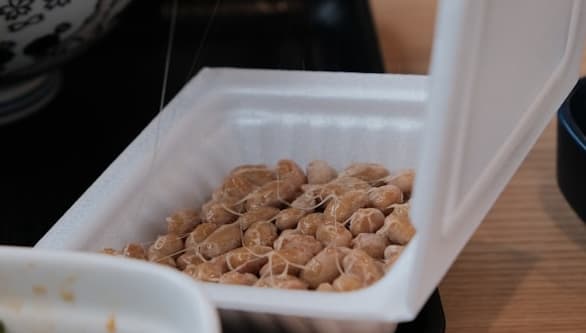
Unless you happen to be of Japanese ancestry, or you’re a very adventurous eater, you’ve probably never heard of natto. Or if you have heard of it and tried it, chances are, it’s probably not something you’d chose to eat every day, or, taking it a step further, adventurous as you may be, you’re likely not a big fan. But what is natto anyway? It’s a traditional Japanese food, made up of soybeans fermented with the Bacillus subtilis bacteria. To most Westerners, it tends to look less than appealing – a dollop of reddish brown, mushy beans stuck together in a stringy cheesy goo that a biochemist would describe as a chain of glutamine amino acids. And it’s aroma and taste? Well, that can take a little getting used to, given its fragrance is reminiscent of a pungent aged cheese or fermented fish. So, who gets the credit for creating this odd dish? More accidental than not, legend has it that the troops of a great 11th century samurai warrior were boiling soybeans for their horses when they were attacked. In a hurry, they swept up the beans in straw bags and ate them a few days later, after they had fermented. And that’s how natto came into the world -- the troops, and the samurai, decided they liked the taste.
But you don’t have to. An enzyme contained in the natto goo, ‘nattokinase’, is sold as a supplement in health food/supplement stores and contains some very powerful properties that are well worth working into your routine. Nattokinase happens to be one of the better-studied supplements out there, with research to support its usefulness as a complementary therapy to help lower the risk of heart attack and stroke. It’s also showing promise as a therapy to push back against “long Covid.” And, in its natural form, natto, it’s a valuable prebiotic and probiotic, a friend to your gut microbiome. So how to get in on the good stuff? Here’s what you need to know about this surprisingly versatile supplement -- and food:
Fighting fibrin…and heart attacks.
In supplement form, nattokinase has, if not a super-power, an impressive one. It breaks down fibrin, the mesh that gives blood clots their structure. That may not sound exciting until you consider that clots are the biological timebombs responsible for most heart attacks and strokes. What happens is that cholesterol plaque builds up in the lining of, say, a coronary artery. An unstable plaque may break off and shoot down the vessel. But contrary to what many people think, and what medical science used to think, it’s usually not the plaque that blocks the artery, cutting off the oxygen supply to the heart and precipitating the heart attack. Rather, it’s the clot that forms around the rupture site which can grow so large as to blockade the vessel. And nattokinase looks to be able to slow growing blood clots or shrink them or nudge them to resolve faster. That kind of “fibrinolytic” activity has been well documented in the lab and in several clinical studies so it makes sense that it might reduce heart attack and stroke risk even if we don’t yet have the clinical trial results to back that up.
What the trials have shown is that nattokinase can lower blood pressure and reduce LDL cholesterol, if not on the order of what pharma drugs deliver. At least one clinical trial found that NK, at a very high dose, can shrink atherosclerotic plaques, but better designed studies have failed to find that effect. Then throw in a large observational study from Japan that saw natto-eaters having significantly less cardiovascular disease than non-natto eaters, not proof of cause and effect, but encouraging. If you put it all together, fair to say nattokinase, and possibly natto, offers a protection bonus for the heart.
Long COVID: the next nattokinase frontier?
Without a doubt, nattokinase’s effect on the cardiovascular system is the best understood of the compound’s potential health benefits. But there is growing interest in another application, which centers on using it as a complementary therapy to fight long Covid. The interest in this new application was sparked by a 2022 paper by a team of Japanese researchers who demonstrated that nattokinase’s ability to break down proteins – not just fibrin proteins – could, under lab conditions, be used to dismantle “protein spikes” on the Covid virus. These spikes are responsible for the virus’ transmission and, some researchers believe, for the persistence of symptoms after the rest of the virus has cleared the system. A working theory is that the nattokinase may help dissolve the “microclots” triggered by the spikes, improving blood flow, as well as serving as an anti-inflammatory balm to the system. Right now, there is no single pharma drug that has done much to clear up long Covid so it’s an attractive theory and one that definitely needs to be looked at more closely in clinical trials.
Natto, the microbiome’s friend.
When we talk about gut health, we turn our attention back to the source of nattokinase -- natto, the fermented soy dish. In Japan, it’s typically eaten at breakfast as a side dish, often added to rice. Here, it’s widely carried in Japanese or Asian grocery stores and sometimes in bigger wellness-oriented retailers like Whole Foods, alongside tofu and tempeh. Wherever you choose to get yours though, what’s cool about the stuff is that it’s simply a nutritional powerhouse, packing plenty of protein, vit K2 and fiber in a very modest package. In other words, it’s a valuable prebiotic, feeding the gut microbiome what it needs to thrive. And human studies on Bacillus subtilis, the bacteria that makes natto natto, has made the association between higher natto intake and a microbiome rich in bacterial strains that produce the short-chain fatty acids that support the gut wall.
Dosing your nattokinase.
Unlike any number of supplements, you may be more familiar with, nattokinase isn’t measured in milligrams, but rather in Fibrinolytic Units or FUs, which tells you how active the enzyme is, not how much it weighs. Most supplements are in the 2,000 FU range (some with the recommendation to take twice a day). That 2,000 FU dosage is commonly used in the research as well, although some of the cardiovascular studies have gone as high as 10,800 FUs. It still early days when it comes to figuring out optimal dosage and for which purposes, so follow package dosing instructions and, as ever, consult with your doctor to make sure it won’t compete or interfere with any other pharmaceutical or supplement you may be on, and that it won’t exacerbate any existing health issues.
Though generally considered safe, keep in mind that nattokinase can have a blood-thinning effect so best to avoid it if you’re already on blood-thinning medication, including a daily aspirin, or have a bleeding disorder. Same goes for women who are breast-feeding.